
News
Latest Updates
Stay up to date with all the amazing work of L.I.F.E



More stories from L.I.F.E
US State Department Helps Fund Sewing Project
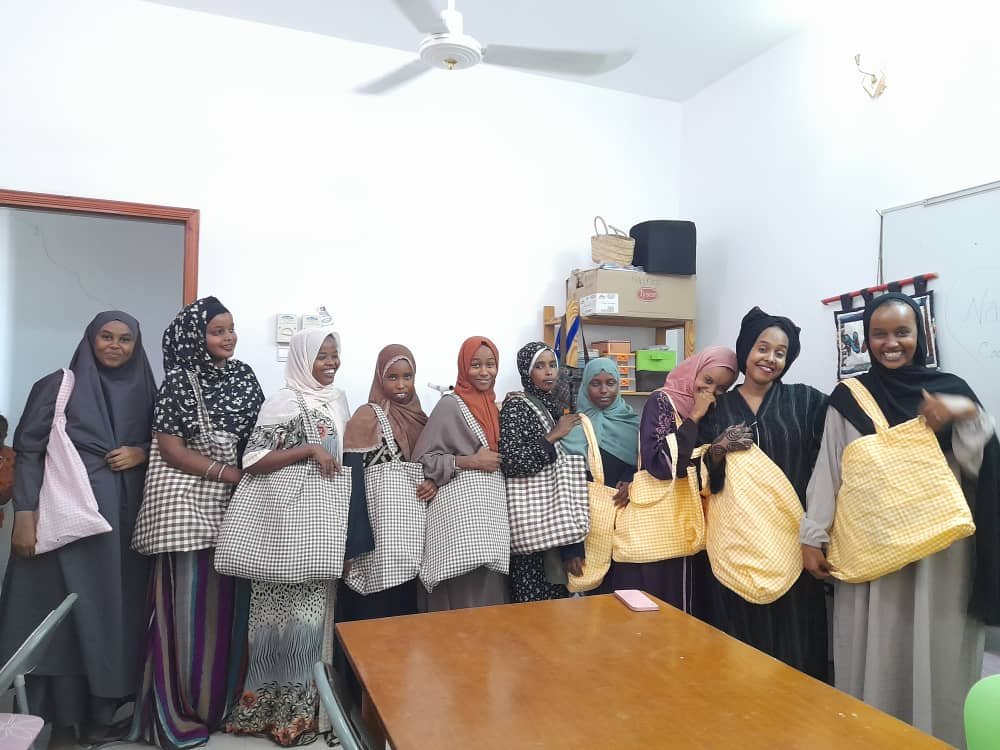
Financed by the American State Department through the Julia Taft Fund, Local Initiatives for Education (L.I.F.E.) was able to provide a place for 60 students from different parts of the refugee camp to come and learn how to sew. The students, in groups of 20, work three hours a day for three days a week. The students begin with little or no experience in sewing, and are taught by former students of the sewing project. Skills taught include basic cutting, advanced clothes creating, and maintenance of the machines. In February of 2016, 43 students graduated from the sewing center. These graduates are now able to use their skills to provide an income for their family.

Shoe Distribution in Djibouti
Recently our team distributed flip flops to some of the villages in rural Djibouti. Here are their stories:
We identified vulnerable families who would benefit the most from the flip-flops. There were 250 families who were identified, and all of them were homeless women with children. One lady Fatouma Sheem said that her family were really happy to get the flip-flops. For a long time they have walked barefoot and this gift comes at a crucial time. Their homes were recently destroyed and they have lost everything. "We thank the providers and may God bless them for donating in a difficult moment."
Blanket and Rice Distribution in Djibouti
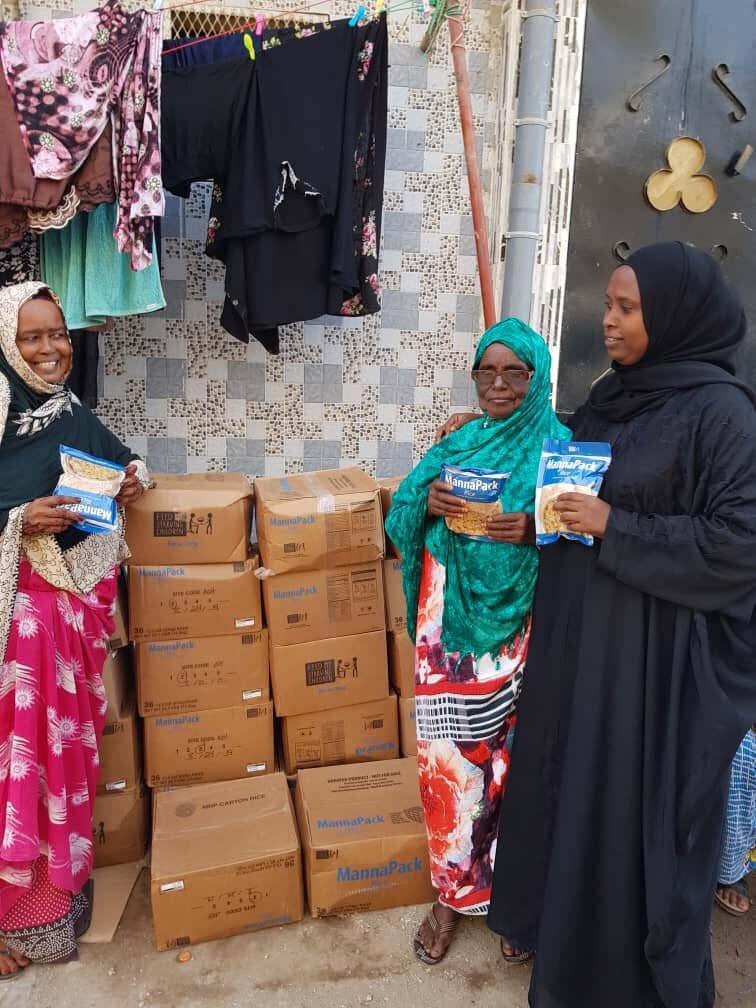
We recently received a shipment of blankets and rice and bean packets. We distributed these among a rural area in Djibouti.
"Thank you for your help, we are so happy to get this help. We welcome any kind of help from you. Really we are desperate people because we live in a border area where no one helps us."
The girl (pictured right) lost her father in Yemen. Her mother works hard to sell material on the street of the village. Living as refugees she has not had the opportunity to go to school. She has to help her mother sell material so they can have money to live.
When we asked her what she would like to get in life, she responded, "I would like to go school to change the life of my family in the future."
As an organization we are working hard to create opportunities for children like this girl. By providing basic necessities like food and blankets we can help take the burden off of the children and give them an opportunity to get in school.
"Thank you for your help, I was wondering what I was going to do for my children to protect them from the cold. But now I have two blankets and 6 boxes of rice. This is the first time in my life to get help from somewhere and I was so surprised when I was given these blankets and rice!
I hope this is not the last time to get help, and I hope this will open doors for help of abandoned people like us. I would like my children to get better future than me. Thank you so much. You create us hope of life and we keep you eye on always."
"It is a big challenge to be born homeless and to grow up having children in the same condition—no job and no income, but begging in the streets with our children is our daily life! We are very thankful to those who sent us the rice. May God bless them."
"My name is Halimo and I am a mother of 6. I am very happy today, and I have no words to express it. Thank you so much for giving us the blanket to protect us from the cold."

"My name is Zahra and I am a grandmother of two. Their family separated when the youngest was 6 months old. Today he is two and half. Only Allah knows our situation and this blanket which you gave us is one of our main needs. Thank you so much for remembering us."
"I want to bring this blanket and rice to my mother. My mother is sick today and at home. I love this rice; I want to eat it and grow up quickly to help my family in the future. I want to be a doctor. If I were a doctor today I would help cure my mother."
"My name is Mona and I am 11 years old, and this is my brother Kalid. I help my mother at home, cooking food, washing clothes, and doing dishes. I do not attend school, but I do attend the local school where I learn religion. When I finish there I want to learn other languages like English or Arabic. In the future I want to help my family."
"I am a mother of two children and am happy to have this blanket to keep my children from the cold. This is my youngest daughter and she has been sick for two weeks. There is not a good hospital here, and we do not have enough money to get to the capital. We hope she will recover one day with the traditional medicine available in our village."

"We are so happy today! We got help from you and this is not what we expected. We didn't know if there were merciful people who knew our situation. You give us great happiness. Today we got rice and blankets and it is the perfect time for blankets because of the cold."
"I am a mother of four children and am very happy to get this blanket and rice to my children." Thank you for your unforgettable help and we hope to have more from you in the future. You are so dear to us for bringing the blankets and rice into our village. I think tonight my children will not be cold when I put this blanket them. Thank you again. I very appreciate with your gift."
"We are very happy to get this wonderful gift from people who love to support weak people like us. Today is unforgettable day for us because we now have blankets for our children.. We would like to thank those merciful people who brought us blankets and rice into our village."
Somali Nursing Students Distribution Nutritious Rice in Somaliland
The nursing students from the Amoud Health Science faculty conduct family visits in the community. This semester they have been going to an area where people have returned to live after being in Ethiopia. During the war they fled from Somaliland to Ethiopia and now they have come back. In this specific area are the poorest of the poor.
In the initial visit from the nursing students they took a family health assessment where they assessed the nutritional status (MUAC assessment tool) of the children under five. In this specific area they found that some of the families who had children were malnourished or in danger of malnutrition. Some of the families could not provide three meals a day for their children. The students brought nutritious rice packages to give out to the families.


In Borma there is an orphanage with about 90 children between the of 3 and 16. The students went there to talk about health education and spend time with the children. They delivered also delivered one box of nutritious rice for the children.


Somaliland Distribution
Gargarra is a village in North West Somaliland, that has begun to pursue agricultural development. They have fields outside the village, and have begun growing a variety of crops. The Minister of Agriculture asked LIFE to aid Gargarra in preventing flooding in their fields. When the rain comes it goes directly into their fields and destroys the crops, and then heads straight to the ocean. This means that they are unable to conserve the water, and their crops are destroyed. We at LIFE, in coordination with the Minister of Agriculture, decided to give them 80 gabions, and aid them in the installation process. The gabions will divert the flow of water into their irrigation canals, allowing them to save the crops, and conserve water. Water is a commodity in these regions of Somaliland, and so anything done to preserve it is well worth it.
Distribution:
On August 10th 2014, in coordination with the Ministry of Agriculture, LIFE supplied 80 gabions to the village of Gargarra. In order for the workers installing the gabions to be paid, we brought two tons (145 boxes) of rice as well, and used it as Food for Work. As an added kindness LIFE also supplied them with one hundred pairs of Tom’s shoes, which were distributed mainly amongst the children.
The Minister of Agriculture went on this trip as well, because he believed it to be extremely important. Agricultural development is a slow growing sector in the Somaliland economy, and fields getting destroyed by rain would severely hamper its growth. That being said, we at LIFE were very happy to supply gabions to Gargarra, being as it is a project that will have long term implications.
UNHCR Newsletter Featuring Local Initiatives for Education (LIFE)
For a detail looked at L.I.F.E.’s work inside one of the refugee camps in Djibouti, check out the link below to the UNHCR Newsletter. We have been working with a group of women to teach them various sewing projects so they can provide income for their families.
UNHCR Newsletter - Click to Read
Soccer Jerseys in Rural Kenya
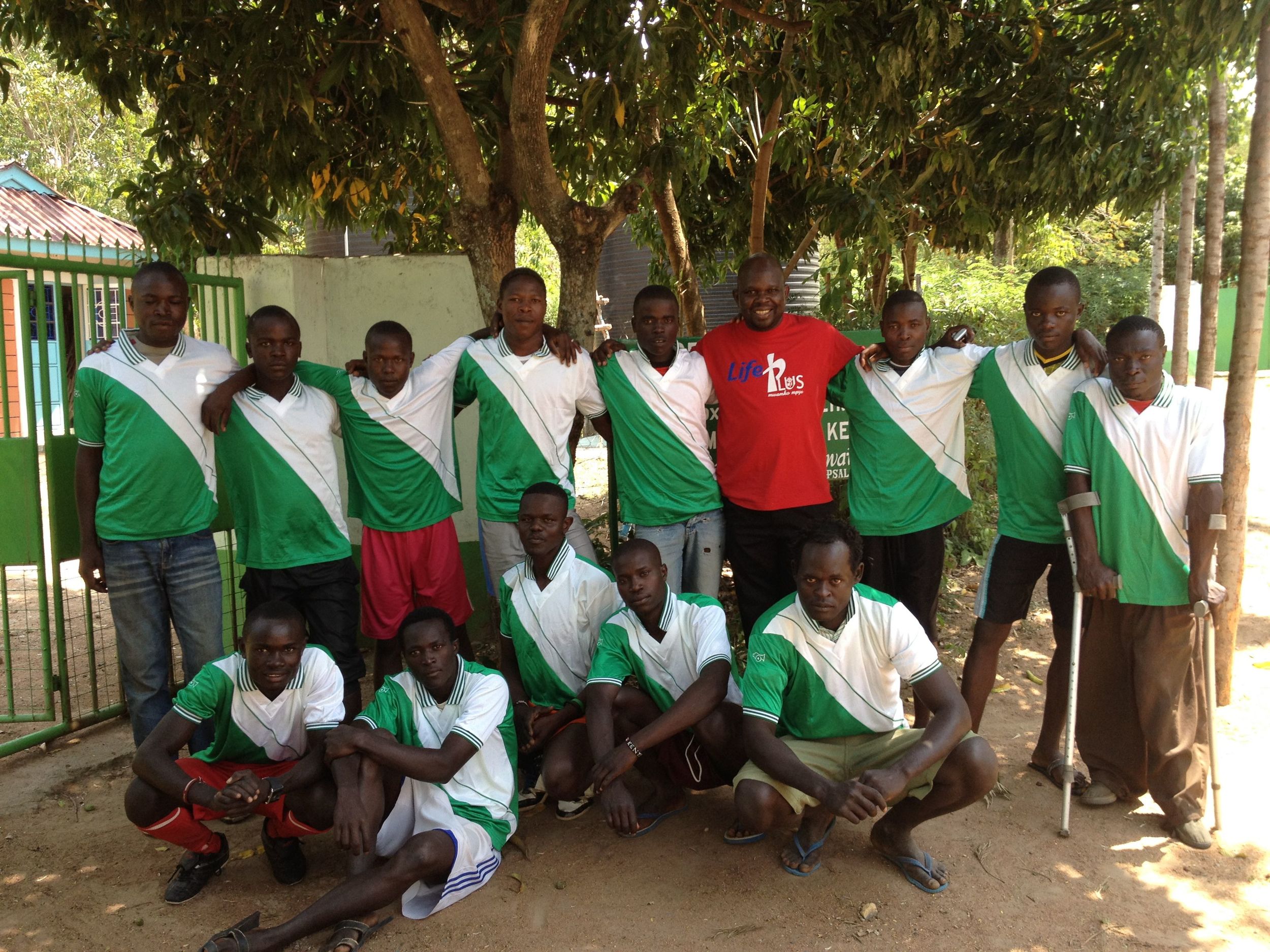
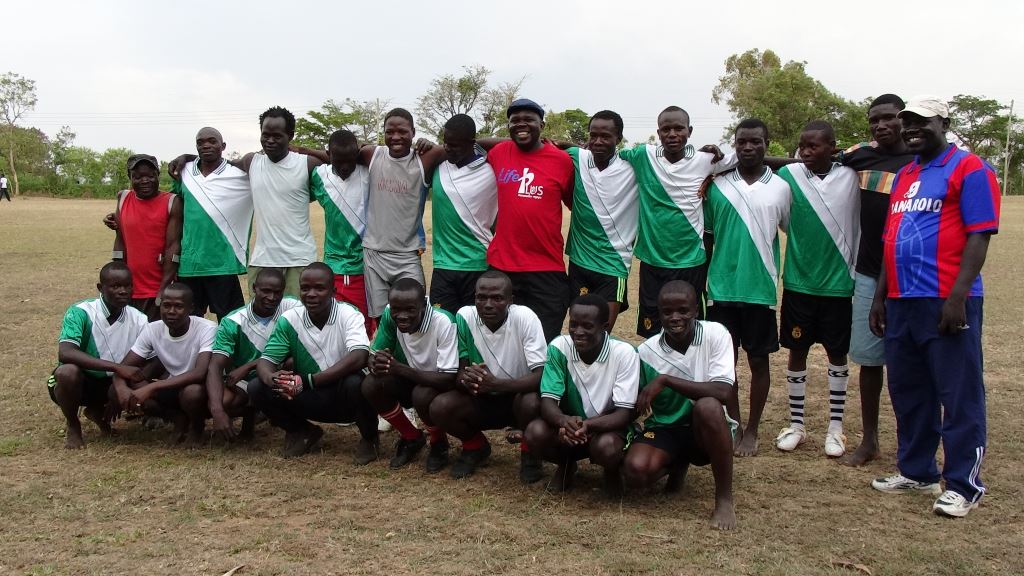
Recently, Local Initiatives for Education (LIFE) sent sport jerseys to the Asembo rural community in Kenya.
Recently, Local Initiatives for Education (LIFE) sent sport jerseys to the Asembo rural community in Kenya. The boys could not wait to put on the jerseys and have been using them for local soccer matches since then. The coaches did however put some conditions in regard to stewardship that would extend the life of such jerseys.
1. The jerseys would only be used for official soccer matches, after which the team leaders would collect them, wash and keep them for future soccer matches.
2. No player would go home with the jerseys after soccer matches but they will immediately be handed over to the team leader for safe custody.
3. No player would use the jerseys for day to day purposes other than for the soccer matches.
The coaches wanted to help the boys understand that it took a sacrifice for the jerseys to reach them and they may not have that opportunity again in their lifetime and hence the need for the diligent stewardship.
While the team in Asembo was lucky to receive the jerseys, the coaches would still like more. "I don't want to ask for more but i am tempted to do so because the team that we played against was also in terrible need. I was also humbled when I saw the whole opposite team made up by young boys from the local secondary school playing bare feet. Some of our team members also played bare feet...I wish to take this opportunity to thank you so much for the huge investment in the form of soccer jerseys that you donated for the Asembo rural community! The investment was very much appreciated and it lightened up the village!"


Inside an IDP Camp: Clothing
The Mohamed Mooge internally displaced people (IDP) camp situated just
outside of Hargeisa, Somaliland is made up of two main camps consisting of 1971
families in total.
The Mohamed Mooge internally displaced people (IDP) camp situated just
outside of Hargeisa, Somaliland is made up of two main camps consisting of 1971
families in total. These are people who have fled their homes and settled here due to
drought and insecurity in recent years. Many of the inhabitants of the camp are from
the South and Central parts of Somalia. Due to heavy rainfall around the Hargeisa
area this year, the United Nations (UN) and International Non-Governmental
Organization (INGO) community was made aware of the IDP’s need for shelter
material via the Ministry of Resettlements, Rehabilitations, and Reconstructions (M
of RRR).
After receiving a letter requesting the aid of the UN and INGO’s from the M of
RRR to help with shelter materials, those present at a Non-Food Item (NFI) and
Shelter cluster meeting created a list of materials that could be distributed to the
IDP camp. Most organizations were able to put together for distribution NFI kits.
However, we at LIFE had children’s sweaters and Nike sports shoes. We decided
that something was better than nothing and agreed to distribute these things
alongside the NFI kits of the other organizations.
On the 11th of April, several organizations including LIFE gathered at a home
for street children near the Mohamed Mooge camp where the distribution would
take place. That day we distributed 1117 children’s sweaters and most of the 1971
pairs of shoes, of which we had allotted one pair per family. About 100 of the
sweaters were given to the children at the street children’s home. Unfortunately due
to security problems we were not able to complete the distribution of materials to
all 1971 families on that day, but we did return a week later on the 18th to complete
the distribution.


Tent Distribution in Dijbouti
Khorasho and Hawa came to visit to say thank you for the 100 boxes of fortified rice and 50 tents given to their settlement outside of Djibouti town.
Khorasho and Hawa came to visit to say thank you for the 100 boxes of fortified rice and 50 tents given to their settlement outside of Djibouti town.
Khorasho is married but has no children. Hawa is married and has 4 children. When her oldest daughter died giving birth, along with the baby, her second daughter went crazy and has to be chained up to their hut so she does not wander off. This is a common practice among the mentally unstable in Africa. Left with no alternative, tying up children is also common when the mom cannot watch her toddlers every minute.
Khorasho’s husband is unemployed and her two remaining children, 7 and 8 years old, do not go to school. Khorasho has no concept of numbers or age, which is unusual among Somalis because even the illiterate can count and often measure their age by seasons and droughts. She said she was around 30 and her mother 120!
Hawa grew up as an orphan in neighboring Somaliland and is also uneducated. Being illiterate is not uncommon, but these women represent a growing number of IDPs (Internally Displaced Peoples) and refugees who have lost all identity with their culture and oral education in general, which the Somalis are rich in. One can meet a poor Somali who still has some cultural dignity and knowledge and dreams. These poor women seem to have lost all hope.


Tents and Blankets
The flash flood surprised everyone after 4 years of drought, filling the wadi
(seasonal river bed) and overflowing into IDP (Internaly Displaced People)
makeshift homes.
The flash flood surprised everyone after 4 years of drought, filling the wadi
(seasonal river bed) and overflowing into IDP (Internaly Displaced People)
makeshift homes. The following are pictures of the distribution of tents and blankets
to the victims of the flood.
We were able to help 80 families with tents and blankets. We were assisted by the Djibouti military camp personal. Most of these victims are not long term residents of Djibouti, but have come into the city to look for work/food due to the loss of livestock in the bush, due to drought. It is ironic that they were victims to a flood.
One lady, a single mom with 4 little children, locked her children in the little hut while she ran out to the market to look for food (this is a common practice). The flood came so quickly that by the time she returned home, her youngest, a toddler, had drown but the other 3 survived the rising water in their little makeshift house.
Another woman was crying, not to be consoled by anyone. She had her children, but could not find her husband. Several people were rescued by helicopter out of the raging water. Most of the people who were affected were IDP (Internally Displaced People).


Join the story
Discover how L.I.F.E empowers communities to create lasting change, restoring dignity and inspiring people to build hopeful, thriving futures.