
News
Latest Updates
Stay up to date with all the amazing work of L.I.F.E



More stories from L.I.F.E
Inside an IDP Camp: Clothing
The Mohamed Mooge internally displaced people (IDP) camp situated just
outside of Hargeisa, Somaliland is made up of two main camps consisting of 1971
families in total.
The Mohamed Mooge internally displaced people (IDP) camp situated just
outside of Hargeisa, Somaliland is made up of two main camps consisting of 1971
families in total. These are people who have fled their homes and settled here due to
drought and insecurity in recent years. Many of the inhabitants of the camp are from
the South and Central parts of Somalia. Due to heavy rainfall around the Hargeisa
area this year, the United Nations (UN) and International Non-Governmental
Organization (INGO) community was made aware of the IDP’s need for shelter
material via the Ministry of Resettlements, Rehabilitations, and Reconstructions (M
of RRR).
After receiving a letter requesting the aid of the UN and INGO’s from the M of
RRR to help with shelter materials, those present at a Non-Food Item (NFI) and
Shelter cluster meeting created a list of materials that could be distributed to the
IDP camp. Most organizations were able to put together for distribution NFI kits.
However, we at LIFE had children’s sweaters and Nike sports shoes. We decided
that something was better than nothing and agreed to distribute these things
alongside the NFI kits of the other organizations.
On the 11th of April, several organizations including LIFE gathered at a home
for street children near the Mohamed Mooge camp where the distribution would
take place. That day we distributed 1117 children’s sweaters and most of the 1971
pairs of shoes, of which we had allotted one pair per family. About 100 of the
sweaters were given to the children at the street children’s home. Unfortunately due
to security problems we were not able to complete the distribution of materials to
all 1971 families on that day, but we did return a week later on the 18th to complete
the distribution.


Tent Distribution in Dijbouti
Khorasho and Hawa came to visit to say thank you for the 100 boxes of fortified rice and 50 tents given to their settlement outside of Djibouti town.
Khorasho and Hawa came to visit to say thank you for the 100 boxes of fortified rice and 50 tents given to their settlement outside of Djibouti town.
Khorasho is married but has no children. Hawa is married and has 4 children. When her oldest daughter died giving birth, along with the baby, her second daughter went crazy and has to be chained up to their hut so she does not wander off. This is a common practice among the mentally unstable in Africa. Left with no alternative, tying up children is also common when the mom cannot watch her toddlers every minute.
Khorasho’s husband is unemployed and her two remaining children, 7 and 8 years old, do not go to school. Khorasho has no concept of numbers or age, which is unusual among Somalis because even the illiterate can count and often measure their age by seasons and droughts. She said she was around 30 and her mother 120!
Hawa grew up as an orphan in neighboring Somaliland and is also uneducated. Being illiterate is not uncommon, but these women represent a growing number of IDPs (Internally Displaced Peoples) and refugees who have lost all identity with their culture and oral education in general, which the Somalis are rich in. One can meet a poor Somali who still has some cultural dignity and knowledge and dreams. These poor women seem to have lost all hope.


Tents and Blankets
The flash flood surprised everyone after 4 years of drought, filling the wadi
(seasonal river bed) and overflowing into IDP (Internaly Displaced People)
makeshift homes.
The flash flood surprised everyone after 4 years of drought, filling the wadi
(seasonal river bed) and overflowing into IDP (Internaly Displaced People)
makeshift homes. The following are pictures of the distribution of tents and blankets
to the victims of the flood.
We were able to help 80 families with tents and blankets. We were assisted by the Djibouti military camp personal. Most of these victims are not long term residents of Djibouti, but have come into the city to look for work/food due to the loss of livestock in the bush, due to drought. It is ironic that they were victims to a flood.
One lady, a single mom with 4 little children, locked her children in the little hut while she ran out to the market to look for food (this is a common practice). The flood came so quickly that by the time she returned home, her youngest, a toddler, had drown but the other 3 survived the rising water in their little makeshift house.
Another woman was crying, not to be consoled by anyone. She had her children, but could not find her husband. Several people were rescued by helicopter out of the raging water. Most of the people who were affected were IDP (Internally Displaced People).


Inside an IDP Camp: Water Filters
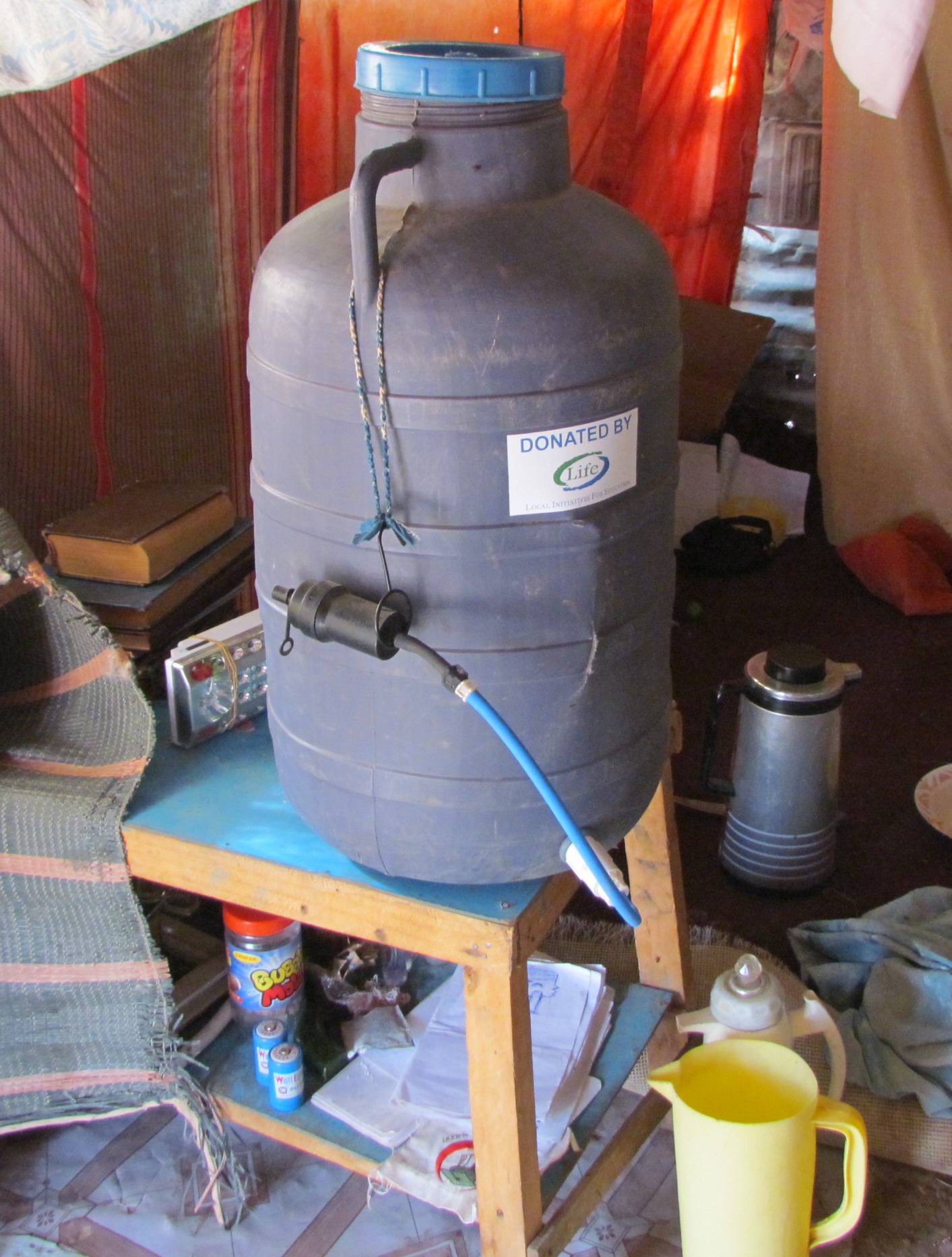
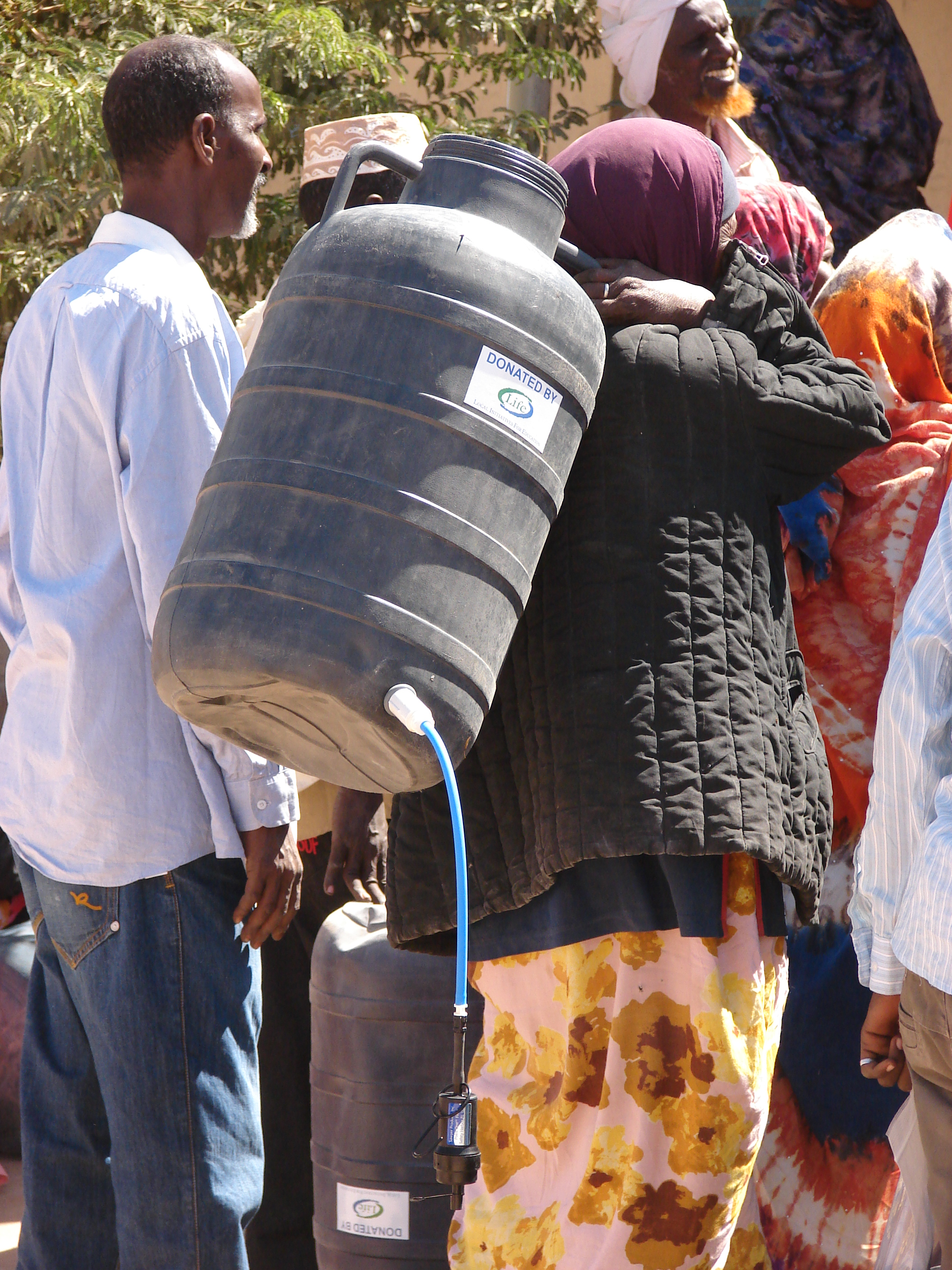
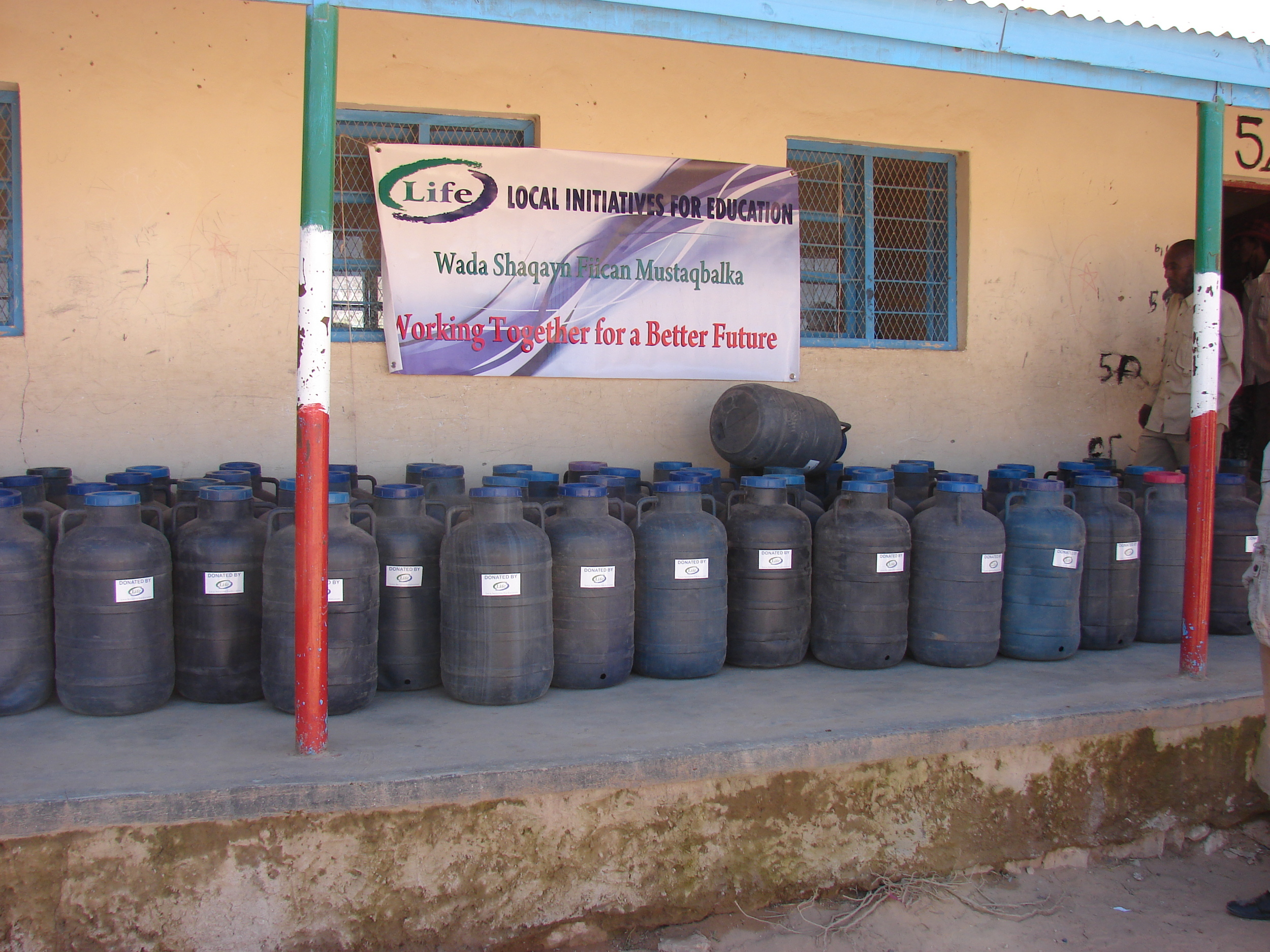
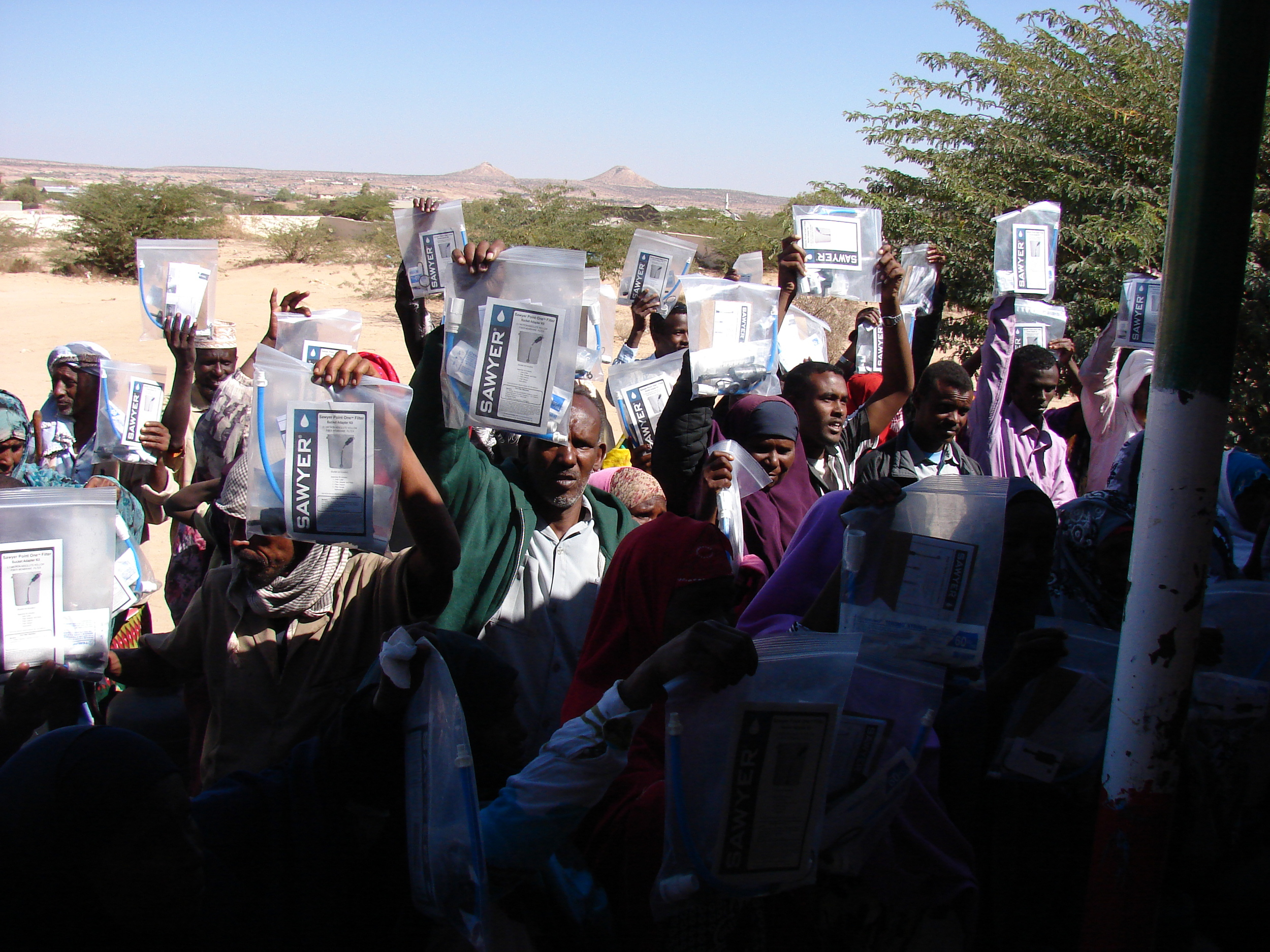
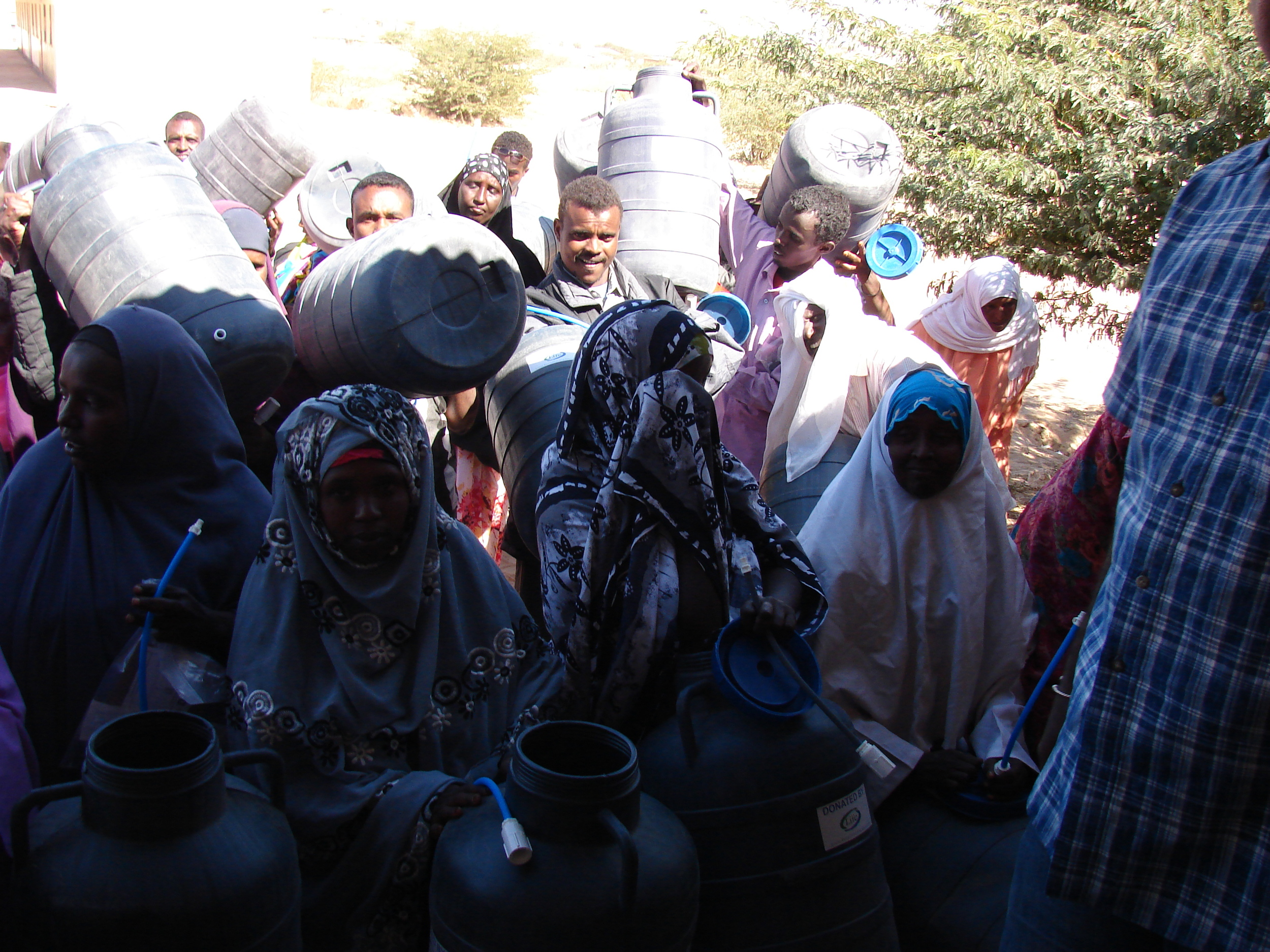
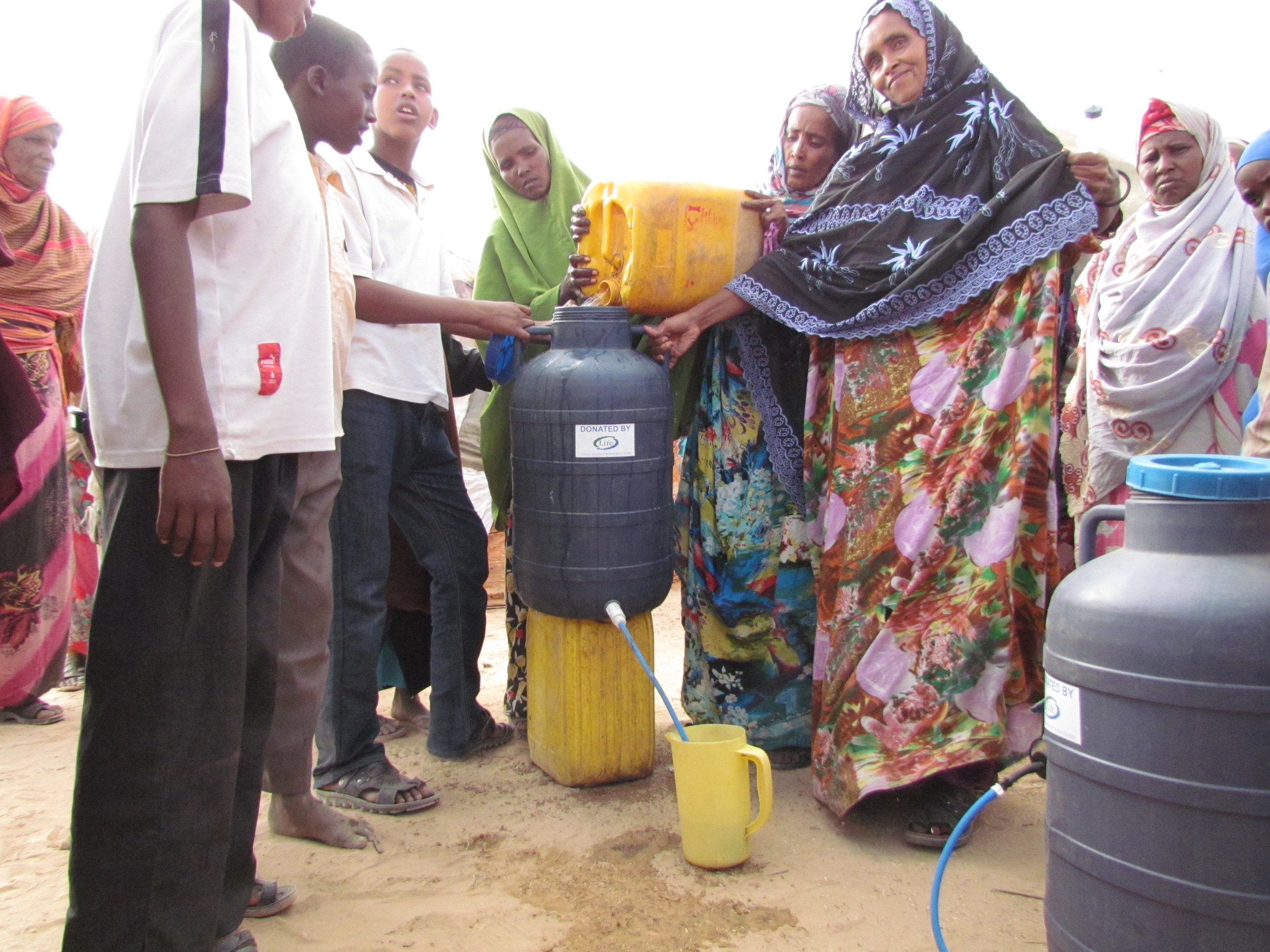
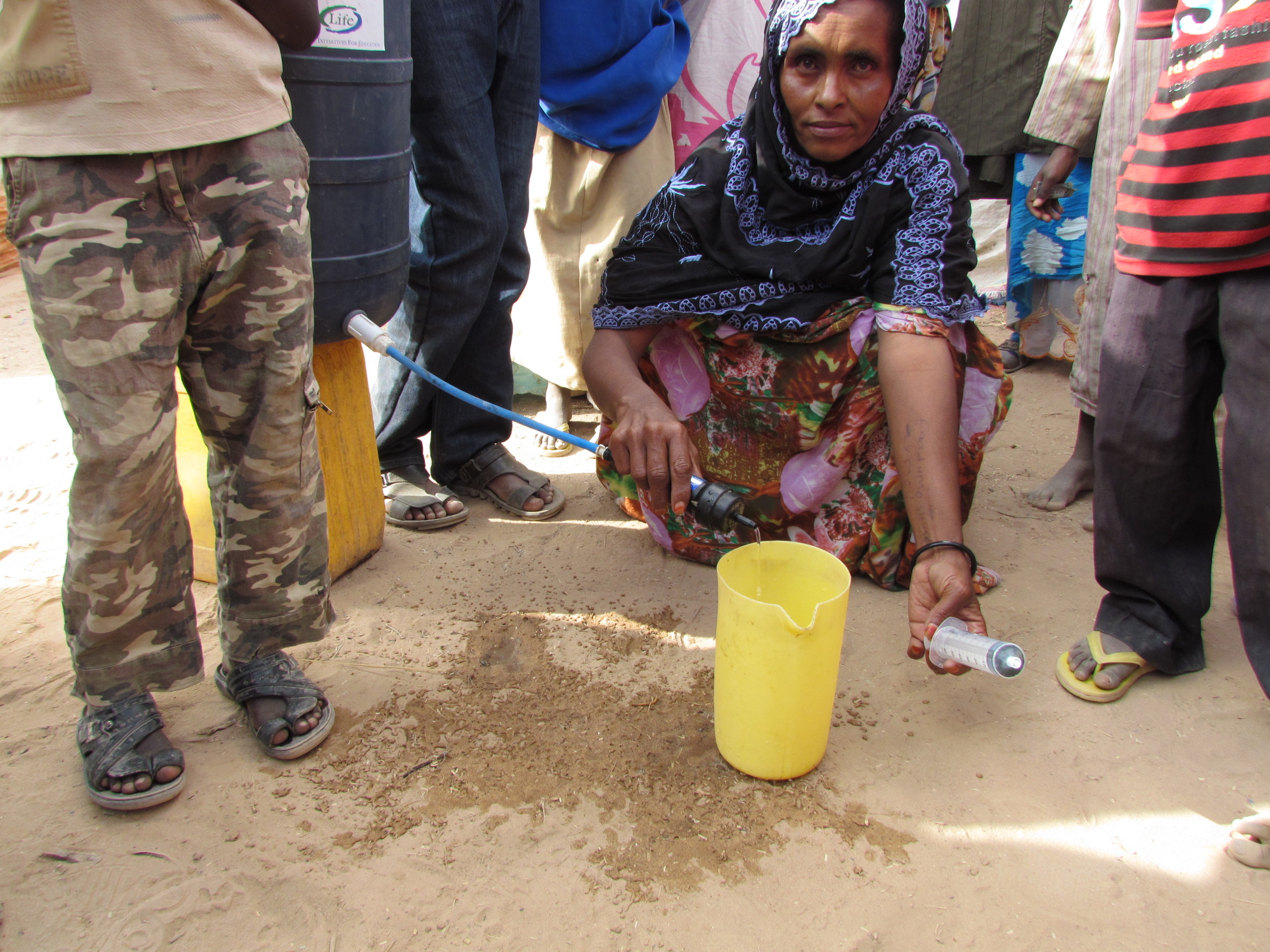
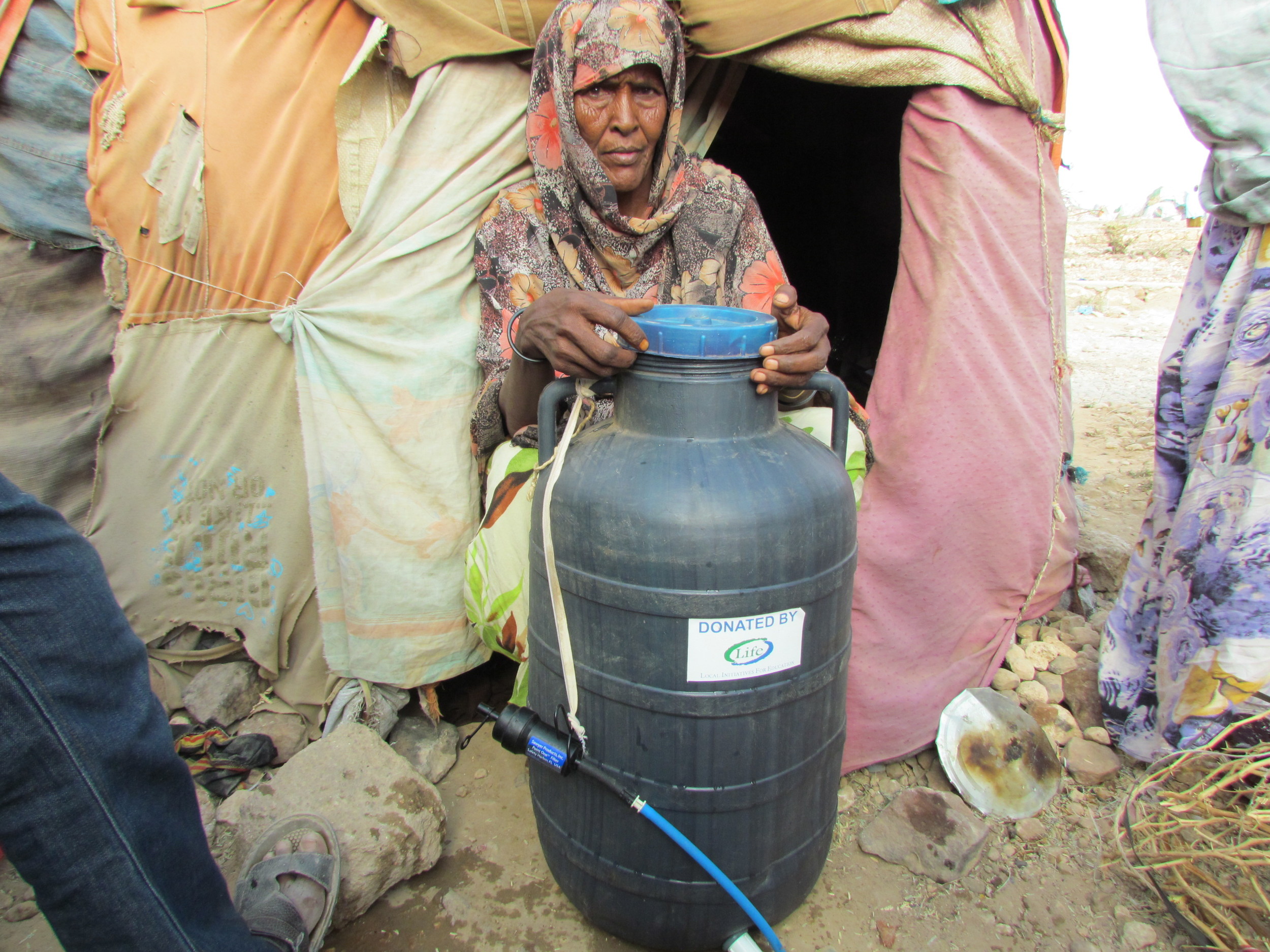
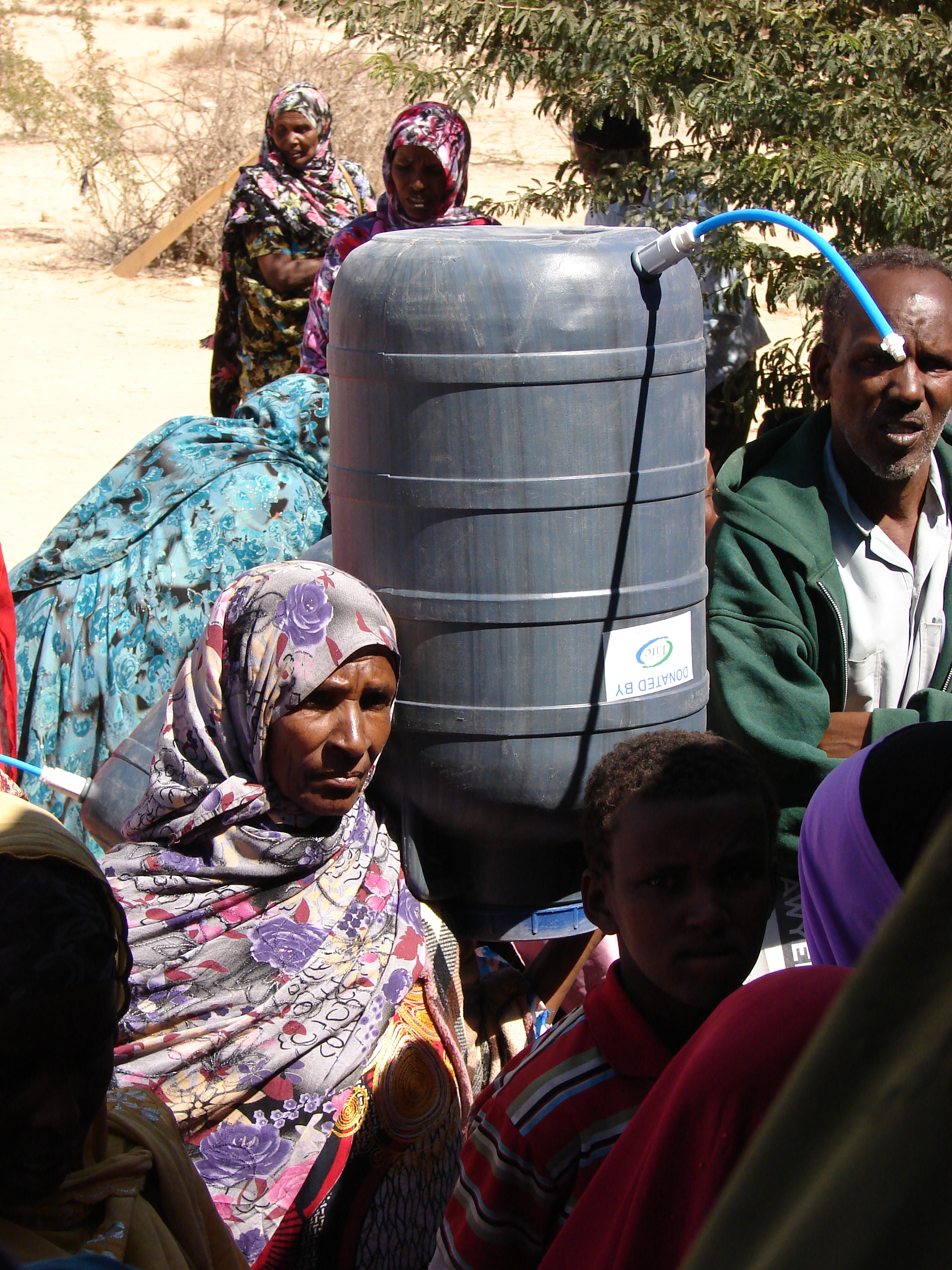
LIFE International has provided 85 water filters and containers to the inhabitants of Muhammed Moge IDP camp.
Local Initiatives for Education (LIFE) has provided 85 water filters and containers to the inhabitants of Muhammed Moge IDP camp. These filters consist of a 0.1 micron absolute hollow fiber membrane filter that removes 99% of all bacteria and 99% of all protozoa. It cleans at about 1 liter per minute. No replacement filter or cartridge is necessary and cleaning can be done by backwashing the filter with the provided syringe.
We provided the 80 leaders of groups of 20 families each with a water filter so that the whole camp will have access to a filter. The filter was not given to the leader alone, but to the 20 families together. The extra 5 filters were given to the clinic and the market place.
The training was very well accepted and the leaders responded well. We trust that this will make a difference in the camp and especially in the lives of the many children.

Nure Ali is a 75-year-old Somalilander who lives in the camp. He has 2 wives, but only 10 of his 18 children are still alive. He was elected as a leader amongst the 20 families of Somaliland who live close to him. Some of his children do house chores for other families to help provides for the family. “Water is life and the filter will help us stay healthier,” he said.

Farhia Hussein is a professional nurse from Southern Somalia. She left Mogadishu after her husband was killed in the fighting. She has 5 children and is volunteering in the makeshift clinic. There are more than 100 people visiting the clinic on a daily basis and one of the biggest problems is diarrhea due to lack of hygiene. She is very thankful for the filters and believes that it will make a difference in the camp.

Sara is a strong lady, but the sorrow is evident as she tells us her story. About 7 months ago, as a new flare of violence broke out over Mogadishu, she and her husband (with their 9 kids) fled. As they were running away, her husband was injured and she had to leave him behind. “I’m not sure if he is still alive,” she explained. The journey (1500km) to Hargeisa took more than a month for her and the children (between ages 3 and 17). Sometimes they got a ride, but for most of the journey they had to walk. She stayed in Hargeisa for 2 months before she moved to the camp.
Inside an IDP camp: Food Relief
The needs in the Internally Displaced People (IDP) camp in Mohammed Morge, just outside of Hargeisa, are extreme.
The needs in the Internally Displaced People (IDP) camp in Mohammed Morge, just outside of Hargeisa, are extreme. The camp was established due to the drought in Somaliland. Officially the camp has 1600 families. There are 5-7 people per family of which 4-5 of these members are children under the age of 15. Most often the inhabitants are thus elderly, widowed, or children. The camp is growing with more than 100 new families arriving per month. The major needs in the camp are food, clean water, shelter, proper sanitation, and medicine.

The camp has a functional committee that has registered themselves as a CBO (Community Based Organization) with the Somaliland government. It is divided in groups of 20 families with leaders that were appointed by the groups themselves. There is a makeshift clinic with a nurse from Southern Somalia volunteering her services. Some small kiosks have been opened, a small vegetable market exists, and there are some places that sell water. Some of the inhabitants who are strong
enough go to Hargeisa to beg or look for jobs.
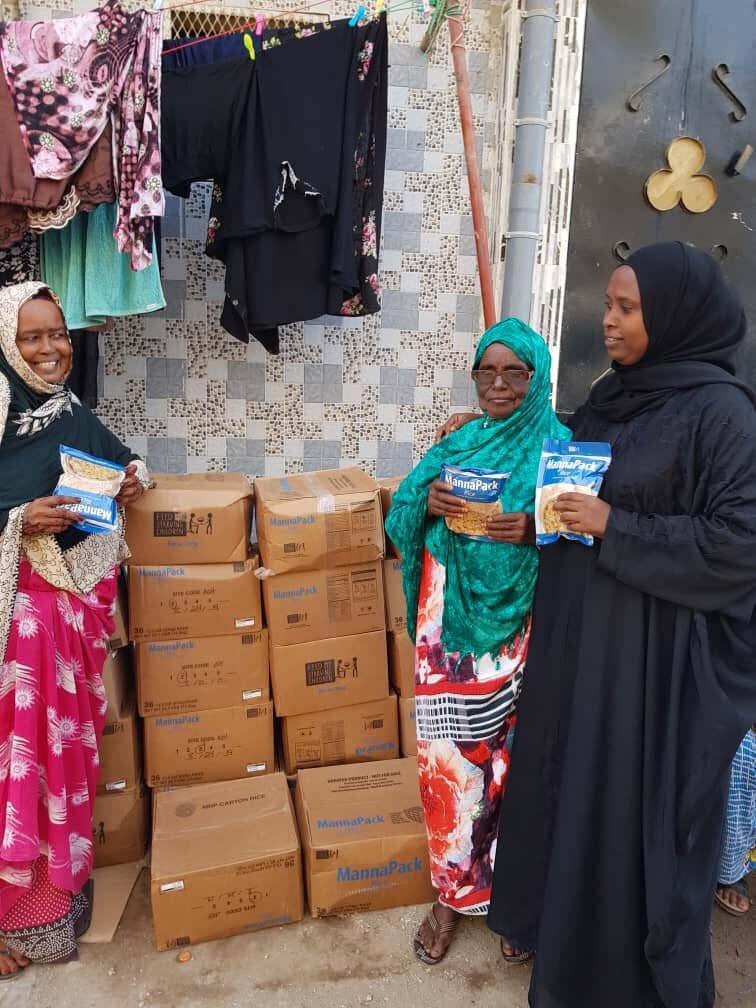
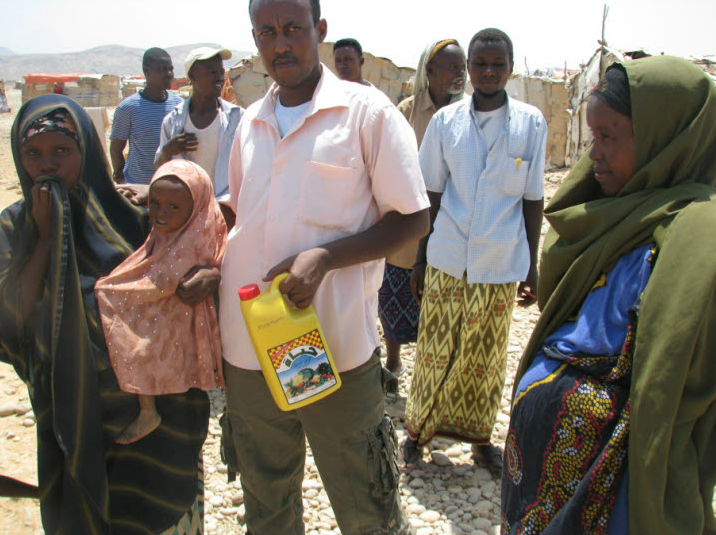
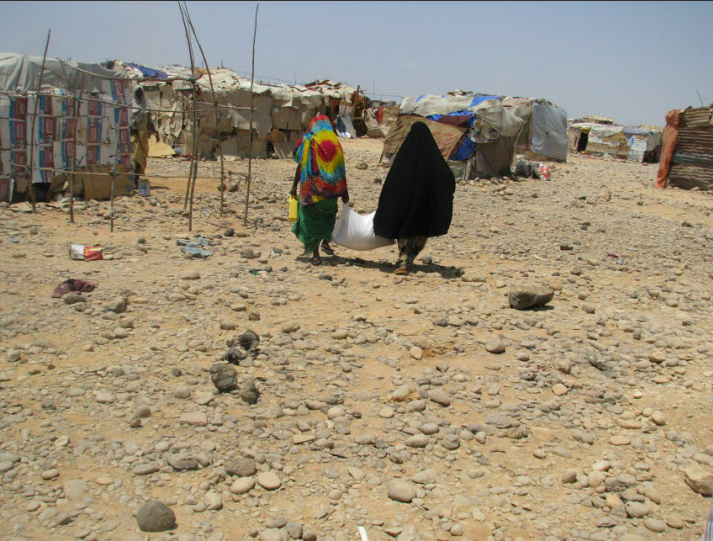
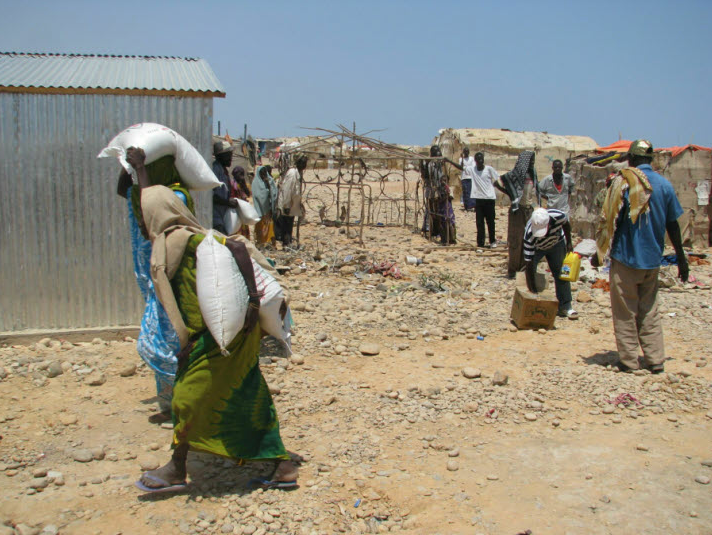
LIFE International (with the help of donors) gave 1500 14kg boxes of MannaPack Rice to the camp. The LIFE International team went to the camp and distributed the 1500 food coupons door-to-door to the inhabitants of the camp. We gave a box for every food coupon received. Although there has been a bit of insecurity caused by the large crowd of people, the day proceeded as planned and the distribution was successfully completed. Some ‘mamas’ cried for joy while many of them were not even able to carry their own boxes. One lady even collapsed due to hunger.

Khadija is a 60-year-old Somalilander who has lost her husband a couple of years ago. She has 10 children. “I pray to Allah for help each day. I have nothing and am only begging for my daily bread! This is the first food I have for more than a month,” she said while kissing my hand (as a sign of appreciation).

Sulecha Ismael is barely 20-years-old and already a mother of two. Her husband (30 years old) is with her in the camp and jobless. They fled the fighting in Mogadishu and now she moves from house to house, looking for some washing to do. Life is difficult with her two small children. Many
times they have to go to bed hungry. She appreciated the Manna rice very much!

Habiba clung to to her box of food as she agreed to talk to us. She never took her hand off the box during the
interview, as if it is her only possession. She is a 70-year-old from a rural area in Somaliland. There are 5 of her children with her in the camp. She also has a child in the hospital. The pain in her face tells the story of her 3 children and husband who have died. She has been in the camp for the last 5 months and this is the first relief food she has received!
Distribution to Fire Victims
At the beginning of March 2013 a fire ignited amongst the makeshift houses of the internally displaced people (IDP) camp near State House in Hargeisa
At the beginning of March 2013 a fire ignited amongst the makeshift houses of the internally displaced people (IDP) camp near State House in Hargeisa. The fire quickly spread consuming the houses and belongings of 109 families. Initially there was a response from several aid and non-governmental organizations; however, by the middle of March the assistance had come to a stand-still.
Upon hearing of the situation, we at LIFE decided that we must do something to further assist the victims of the fire with the little remaining items that we have in storage. With an assortment of clothing and shoes, we put together 109 packages consisting of 11 items, 3 pairs of shoes and 8 articles of clothing.
In coordination with the Ministry of Resettlements Rehabilitations and Reconstructions (MRR&R), we organized the distribution of the packages to take place on the 9th of April. On that day, a representative from each of the 109 families came to the office of MRR&R where they received their package. The people were happy and excited to receive their gift of shoes and clothes.

Zamzam Ahan Dubeh and her two children sit in the MRR&R compound after being given their package of shoes and clothing. They have been in the IDP camp for 5 months.

Mohamed Amal is married and has 3 children. He is a chemistry teacher and speaks English, yet he also has been forced to move into the IDP camp due to the recent heavy rains. Now, his temporary settlement at the camp has been burned down.

Kahar Jama has been living in the IDP camp for the last 22 years. She moved there at the beginning of the civil war.
Food and Tent Distribution
Generous donors have continued to provide rice, food supplements and shelter.
Generous donors have continued to provide rice, food supplements and shelter. A batch of 440 pink tents has brightened up many shanty areas but more importantly has brightened up the lives of the recipients and provided shelter for cold nights and protection from disease-carrying mosquitoes.
In this world, having employment may not be enough to keep body and soul together and having an illness throws you on the mercy of others. Here are some examples of those helped this year.
Khadija is a lady who has three children, one boy and two girls who are deaf. Her husband is a watchman who earns 15,000 Djiboutian Francs ($83) per month.
She told us, “My husband’s salary is not enough for us. Each month I spend 5,000 df ($27) on milk for my children, and 3,000 ($17) on bus fares for my husband to get to work. That leaves 7,000 df ($38) which is not enough for us to survive the whole month. The rice helps us a lot, because I cannot buy vegetables and meat every day, so when I have rice I can cook it for lunch and for the dinner.”
Hassan and his wife and six children live in a dry wadi in a major city. Last fall it rained and the wadi filled with water, washing all their belongings away. Hassan also lives with TB and is under treatment.
He received a tent, built it up on makeshift stilts and now houses his family there. His family also received rice, which helps feed their family, as his wife does not make enough selling snacks on the street to feed and send her children to school. His wife sells little snacks on the street, making enough money for some of her children to have transport money to go to school.


Somaliland Development: Food For Work
Small villages often lack communication with larger centers and cannot evacuate casualties or get in aid.
Small villages often lack communication with larger centers and cannot evacuate casualties or get in aid. Food and other supplies are expensive because of transport costs.
This village is benefiting from a Food for Work program which is building a road to the nearest town as well as providing basic food and clothes distribution.
In the last 10 years in this area, 16 women have lost their lives in childbirth because of the inability to evacuate them to a medical facility.
An elderly lady, Amran, is taking care of her five grandchildren, who were orphaned when their parents died of hunger. She has no source of income, but has the burden of caring for the children, the youngest being nine months old. When the LIFE team gave her 10 packets of rice-soy food, she was overwhelmed with joy and cried. The children gathered and hugged their grandmother and the packs of food.
the route
the road under construction
A School in AShekh Awareh built when a road connected the village to a small town 45km away; Immunization vehicles can now get through and camels are no longer the only transport.
Food Distribution in Puntland
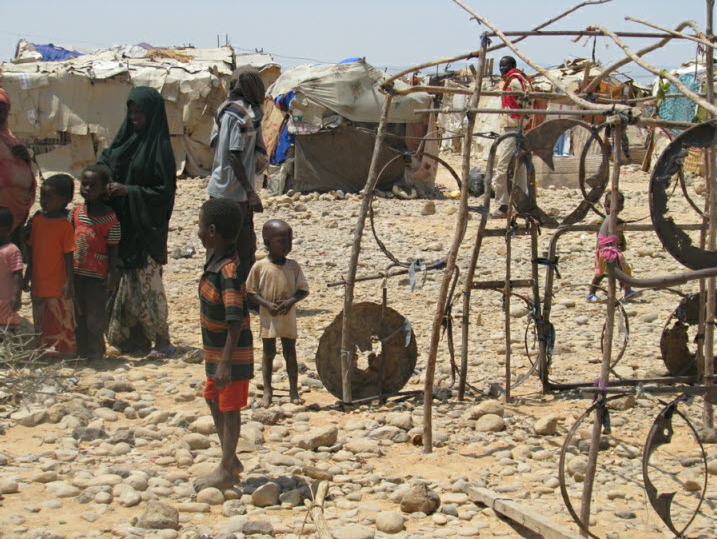
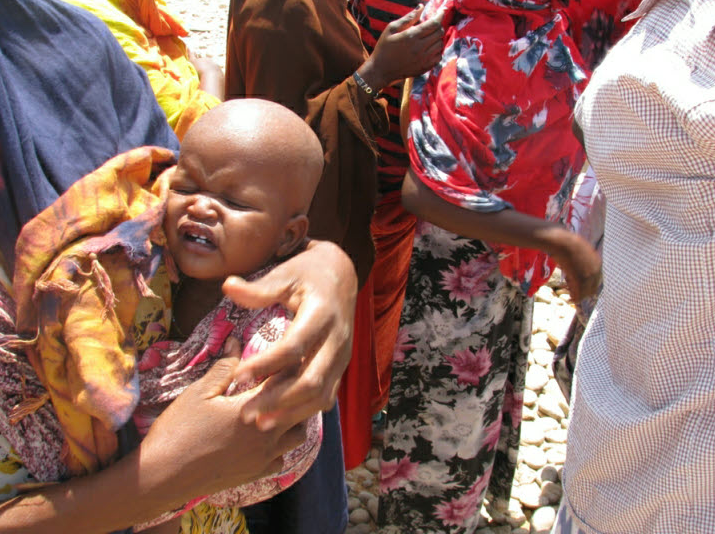
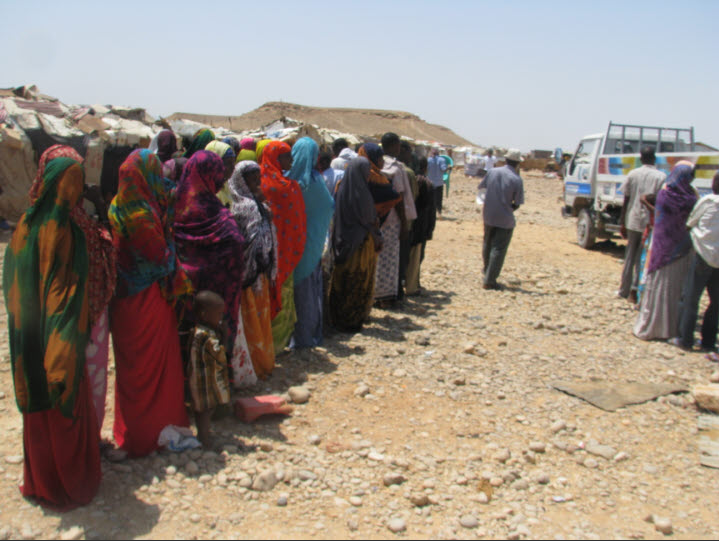
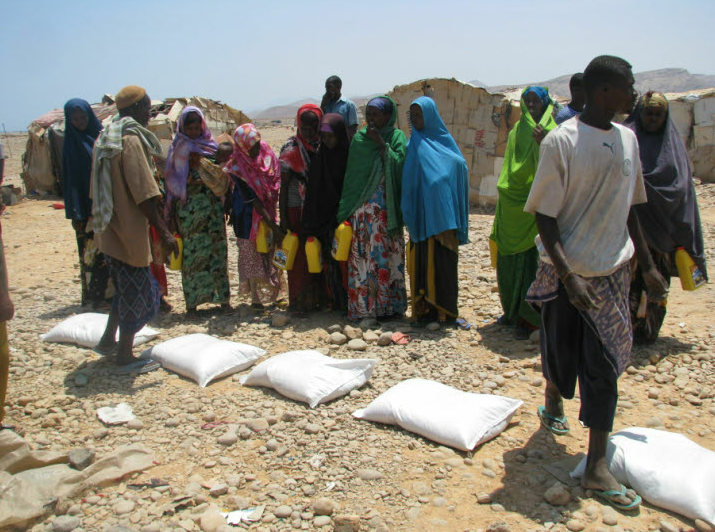
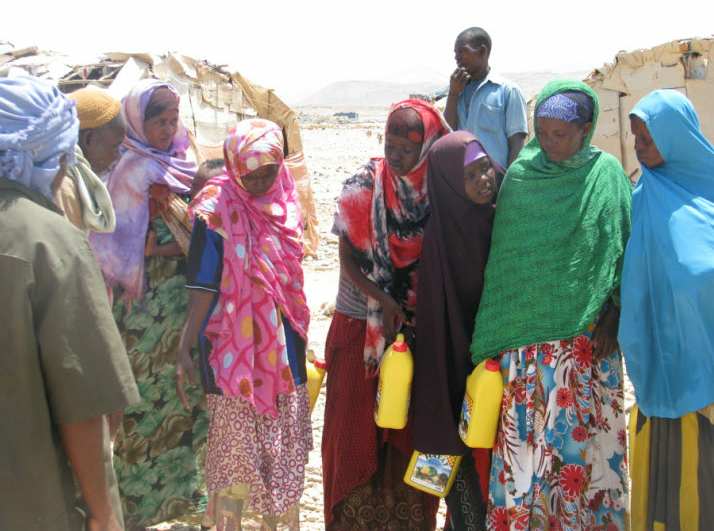
Shabelle Camp had 700 families in September when LIFE International staff arrived to distribute food.
Shabelle Camp had 700 families in September when LIFE International staff arrived to distribute food. The families came from North of the UN-assisted areas of Southern Somalia and could not reach camps around Mogadishu.
These people from the Hobyo, Xarardher, Dusamareb, and Beledweyne groups are use to hard work but through fighting and drought they have lost all their animals and homes.
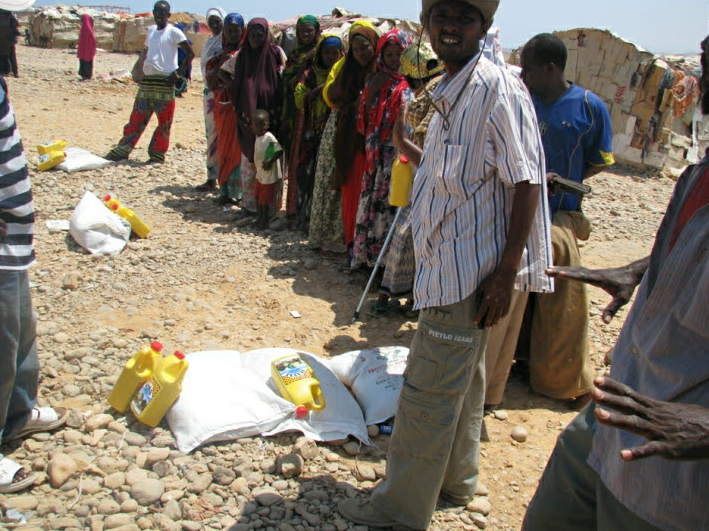
Our staff worked with camp authorities to identify the most needy families and form them into groups of 12-15 who each received 50 kg of rice and a container of oil, enough for one month.
Only 250 families could be supplied from the resources we had. There is a critical need to continue supplies and to supply the remaining families. The only major supporters of this camp are the Islamic Relief and rich pilgrims returning from the Haj.
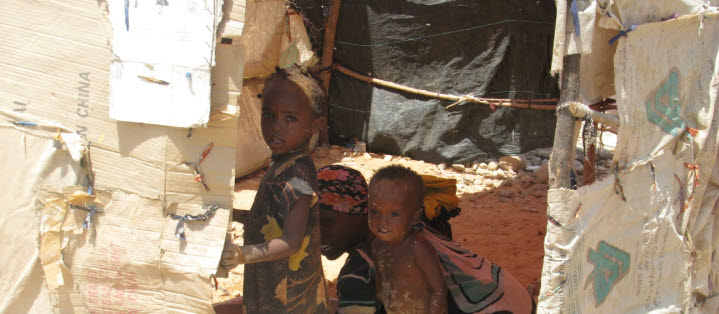
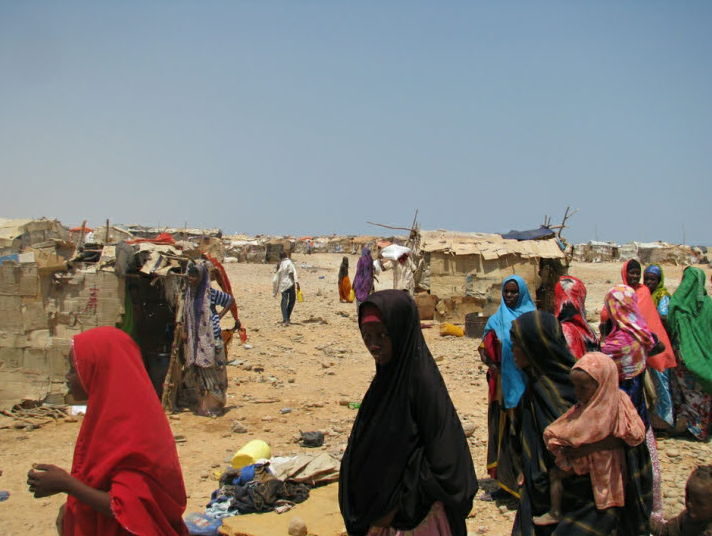
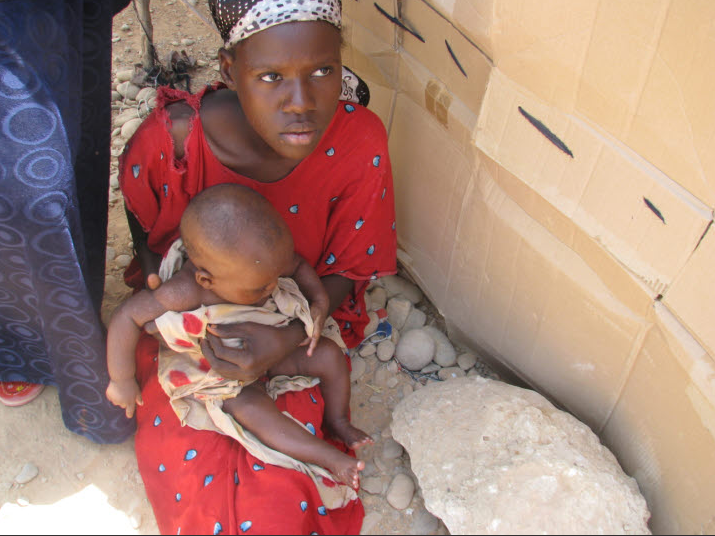
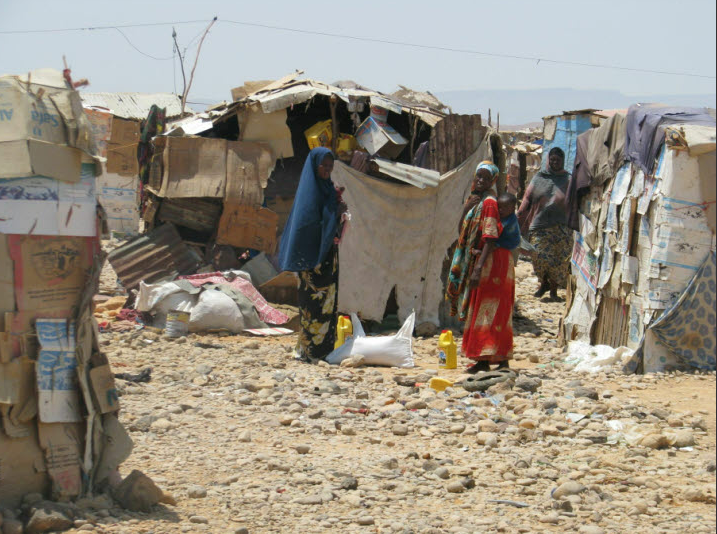
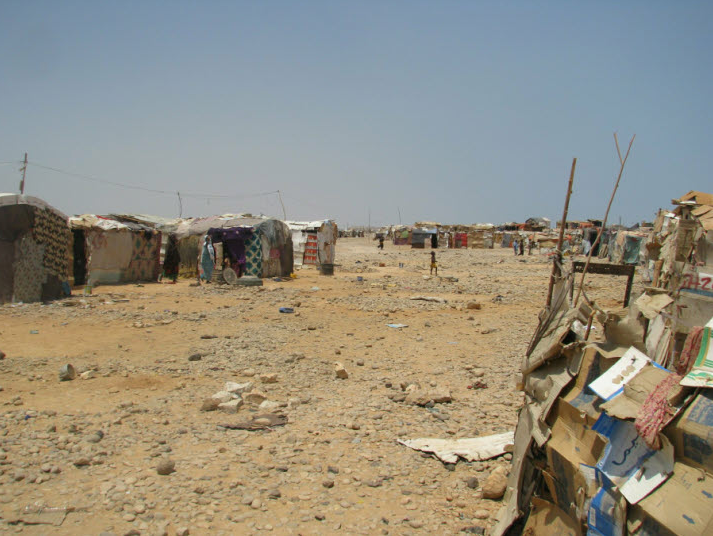
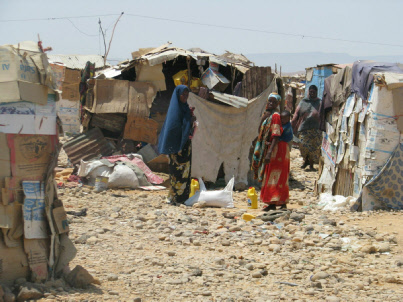
We made a second visit in October and supplied food for 400 families. The camp is made of cardboard homes, not sustainable for rainy weather. Plastic sheeting costs about 10 dollars per home. Right after we visited we found out 200 homes were burned down in one incident.
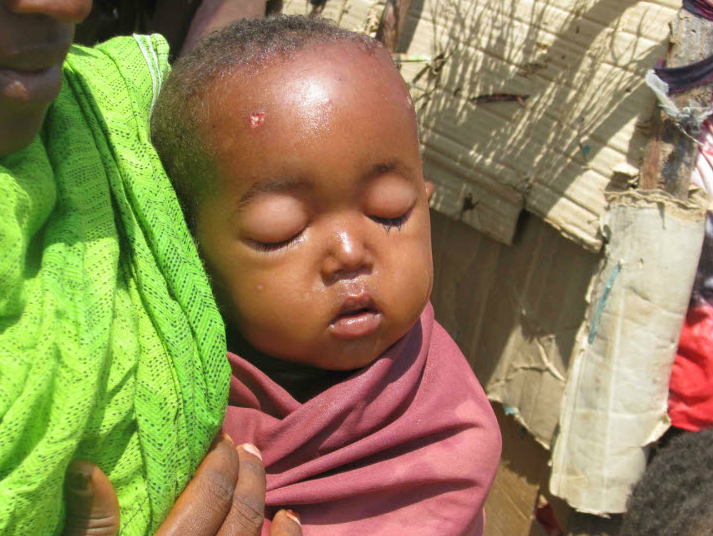
Many refugees have little clothing and the children get sick, due to the lack of medical facilities and doctors. For now we have provided four pit latrines (to serve 5-600 families) and started two wells.


Personal And Social Education
Personal and Social Education, including sexual awareness, morality, and ethics has been a recognized subject in both British and American education for many years.
Personal and Social Education, including sexual awareness, morality, and ethics has been a recognized subject in both British and American education for many years. But it has recently been introduced into schools in the Horn of Africa by Local Initiatives for Education (LIFE) staff who adapted the Crossroads syllabus for local use. Having tested the course themselves as guest teachers over several years, our staff trained local teachers to deliver the revised course to their students.


The first cohort of locally-trained teachers receive certificates on completion of their training.

Join the story
Discover how L.I.F.E empowers communities to create lasting change, restoring dignity and inspiring people to build hopeful, thriving futures.